

Scammed by an adult toys website?
Scammed by an Adult Toys Website? What Happened With ToysCenter.pk
Online shopping is supposed to be simple: place an order, choose your payment method, receive your package, and pay what you agreed to pay.
But what happens when an online store advertises Cash on Delivery, then asks for payment in advance through WhatsApp?
That is exactly the kind of situation that should make any customer stop and think.
This article documents a troubling experience involving ToysCenter.pk, an online adult-toys retailer, and highlights several warning signs that potential customers should be aware of before sending money.
The Order Started Normally
An order was placed through the ToysCenter.pk website.
The website offered Cash on Delivery (COD) as a payment option, which normally means the customer does not have to send money before receiving the order.
After placing the order, the customer contacted the seller through WhatsApp to confirm that the order had been placed.
That is when things became unusual.
Suddenly, Payment Was Required in Advance
Despite the website offering Cash on Delivery, the seller asked for the money to be paid in advance.
This immediately raised concerns.
Rather than cancelling the order, the customer suggested a compromise: half of the payment would be made in advance and the remaining half would be paid when the order was delivered.
The seller agreed.
The first half of the payment was then sent.
The seller subsequently stated that the order would be delivered within approximately an hour and that the customer should wait for a Bykea rider to call regarding the delivery.
At this point, the transaction appeared to be proceeding normally.
Then another person called.
The Second Payment Request
Instead of the delivery taking place, another individual contacted the customer and demanded that the remaining half of the payment be sent before delivery.
This was a major red flag.
The seller had already explicitly agreed that the remaining amount would be paid on delivery.
The customer therefore refused to send the additional money.
The person making the second request was told that the seller had already agreed to payment of the balance upon delivery.
A screenshot of the seller’s WhatsApp conversation confirming the agreement was sent to the person requesting the additional money.
The seller was also sent a screenshot showing that another person was now demanding the remaining payment.
The message to the seller was straightforward: the agreement was payment of the balance on delivery, and the customer would not send any additional money before receiving the order.
Then the Communication Stopped
After the screenshots were sent, the communication stopped.
There was no delivery.
There was no meaningful explanation.
There was no further response from the seller.
The sudden disappearance after the customer refused to send additional money made the situation look extremely suspicious.
While an individual incident cannot, by itself, establish every detail about a business’s operations, a request for advance payment that contradicts the payment method advertised on the website, followed by another demand for the remaining money before delivery and then silence when challenged, is a serious warning sign for consumers.
The Red Flags 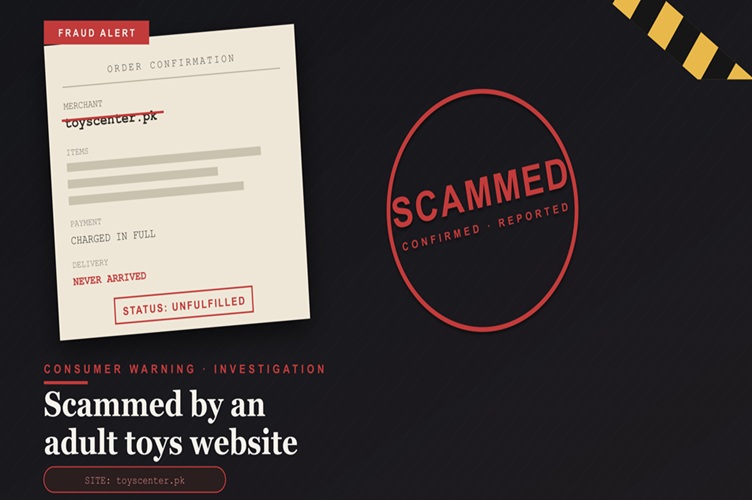
Looking back at the sequence of events, several warning signs stand out:
1. Cash on Delivery Was Advertised
If a website offers Cash on Delivery, customers reasonably expect to be able to use that payment method.
A sudden request for advance payment should be treated cautiously, particularly when there is no clear explanation for why COD is no longer available.
2. The Payment Arrangement Changed
The seller eventually agreed to a compromise:
Half in advance, half upon delivery.
Once that agreement was made, the customer had every reason to expect the remaining amount to be collected when the order arrived.
3. A Different Person Demanded More Money
Another individual subsequently contacted the customer and requested the remaining payment before delivery.
That contradiction is particularly concerning.
If several people are involved in handling an order, customers should still receive a consistent payment instruction from the business.
4. The Agreement Was Proven With Screenshots 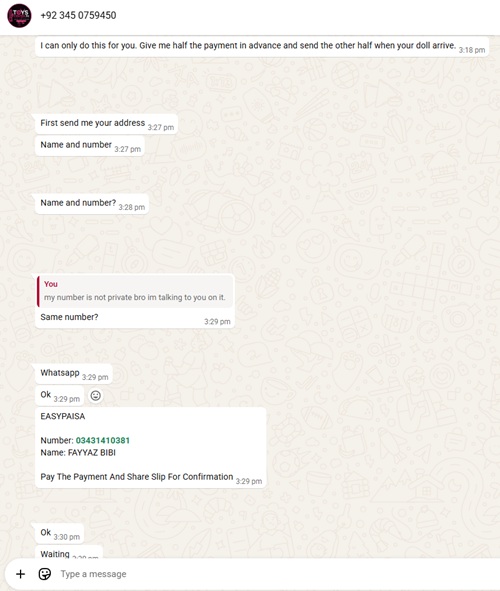
The customer provided screenshots showing that the seller had agreed to collect the remaining amount on delivery.
The person demanding the money was shown the evidence.
The seller was also shown the message from the person demanding the additional payment.
5. The Seller Stopped Responding
Perhaps the biggest warning sign was what happened next.
Once the customer refused to send the additional money and pointed out the contradiction, the communication stopped altogether.
What Customers Should Do
This situation illustrates why consumers should be extremely careful when purchasing from unfamiliar online stores.
Before sending money: 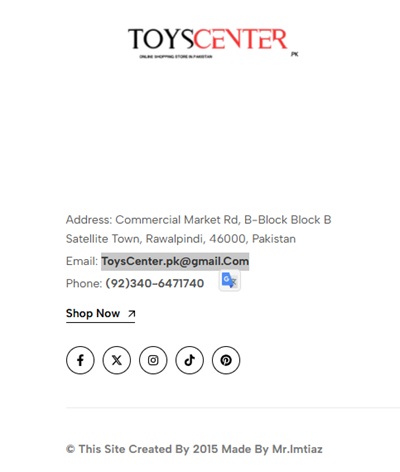
Check whether the website has a genuine physical address and verifiable contact information.
Look for independent customer reviews rather than relying only on testimonials published on the website.
Be cautious when a seller suddenly changes the agreed payment method.
Keep screenshots of WhatsApp conversations and payment instructions.
Never assume that someone claiming to be a delivery rider is genuinely connected to the retailer.
If different people provide conflicting payment instructions, stop the transaction until the situation is clarified.
Do not send additional money simply because someone says the delivery will otherwise be cancelled.
Keep receipts, transaction records, phone numbers and screenshots if a dispute develops.
The Biggest Lesson
The most important lesson is simple:
If a website says Cash on Delivery, but someone suddenly insists that you must transfer money before receiving your order, stop and investigate. 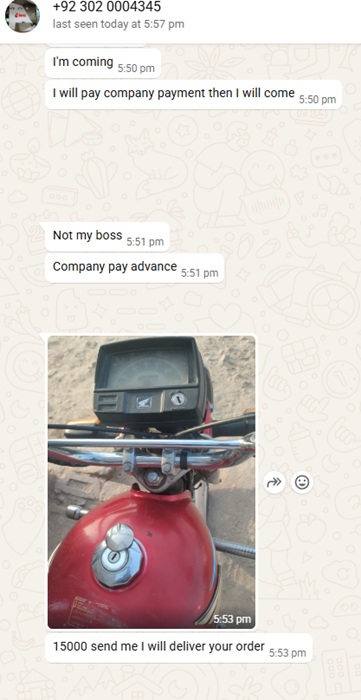
And if the seller agrees to one payment arrangement but another person later demands something completely different, that is an even bigger reason to stop.
In this case, the combination of an advertised COD option, a request for advance payment, an agreement to pay the balance upon delivery, a subsequent demand for the remaining money before delivery, and the disappearance of communication afterward raises serious questions about the transaction.
Consumers should think carefully before sending money to an online retailer under circumstances like these.
A cheap deal is never worth losing your money over.